



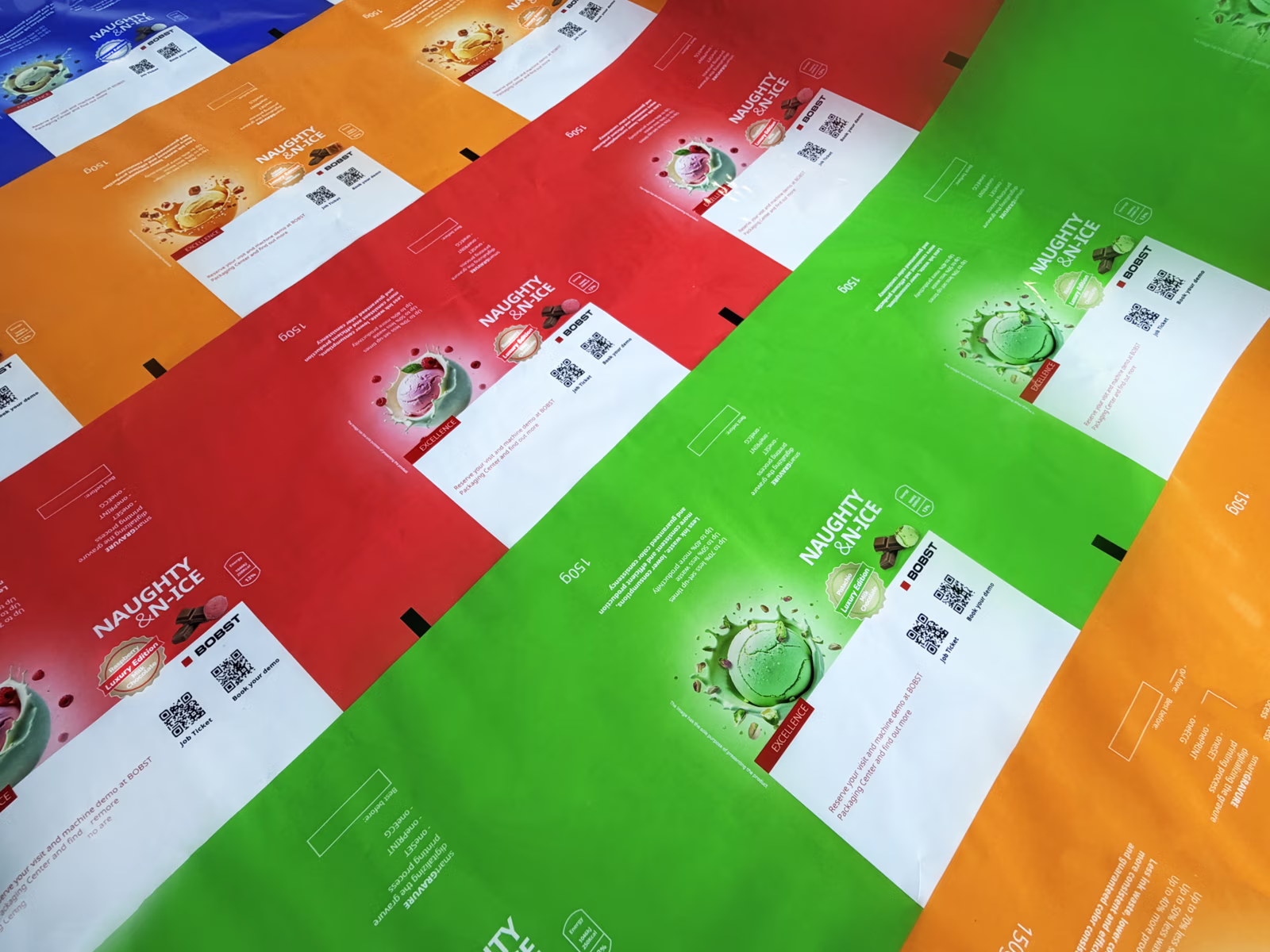
BOBST has advanced its oneECG (Extended Color Gamut) gravure printing technology to include metallic color reproduction using a standard ink set, eliminating the need for traditional metallic inks. The development aims to simplify production, reduce waste, and enhance design flexibility for converters.
Introduced in 2019, oneECG technology for gravure standardizes the printing process through a fixed set of inks that remain on the press between jobs. This minimizes changeover times, lowers costs, and ensures consistent color quality. According to the company, converters using oneECG are benefiting from faster turnaround times, reduced waste, and improved process stability.
Davide Garavaglia, General Manager and Head of Product Lines Gravure, Vacuum Coating & Laminating at BOBST, said: “The ECG process has gained considerable traction among European gravure printers over the past few years because they recognize the crucial benefits this method brings to their business and the wider implications it has for the industry and the environment.”
The new capability to produce metallic effects with process inks was pioneered commercially by Italy’s Poplast Flexible Packaging through its Pop7+1 solution. BOBST’s collaboration with Poplast has demonstrated that gold, silver, and bronze effects can be reproduced without specialized inks, reducing both production costs and environmental impact.
By removing the need for frequent ink wash-ups and cylinder changes, oneECG reduces solvent use, energy consumption, and VOC emissions. It also cuts down on copper and chrome plating waste during cylinder engraving.
BOBST says the innovation supports its broader smartGRAVURE vision—a fully digitalized and automated gravure printing workflow. “Enhancing the potential of gravure, such as offering metallic color reproduction with greater ease and less waste, is crucial,” Garavaglia added.